Septic Services for Residential and Commercial Properties Compared
Septic systems tend to disappear from view until something goes wrong. That is true for a three-bedroom house on a rural lot and just as true for a restaurant, church, office building, or light industrial site outside municipal sewer service. Yet the work involved in maintaining those systems is not interchangeable. Residential and commercial properties may rely on the same basic treatment process, but the demands placed on their systems are often very different, and the septic services that keep them functioning have to reflect that reality.
People sometimes assume the difference comes down to size alone. Bigger tank, bigger drain field, bigger pump truck. Size matters, but it is only one part of the picture. A home usually produces predictable wastewater patterns. Morning showers, evening laundry, a burst of weekend guests, then a return to normal. A commercial property can generate flow in sharp peaks, long operational hours, changing occupancy, grease-heavy discharge, restroom traffic from the public, and equipment wash water that was never part of a typical household load profile. Those differences affect inspection schedules, pumping frequency, recordkeeping, repairs, and even the kind of technician best suited to the job.
Anyone comparing septic services for a home and a business should start with a practical truth. The stakes are higher on the commercial side, but the margin for neglect is often smaller on the residential side. When a business system fails, downtime can interrupt operations, trigger health department involvement, and create liability. When a home system fails, the damage can spread quietly into the yard, plumbing, well water, or basement before the owner acts. Neither situation is minor, and both demand informed maintenance rather than emergency-only attention.
The system may look similar, but the operating conditions are not
At a basic level, most septic systems separate solids from liquids, allow partial treatment in a tank, and send effluent into soil for final treatment and dispersal. That description fits many homes and plenty of commercial sites too. What changes is how hard the system is pushed and how consistent the loading remains over time.
A typical residence has a relatively stable occupant count. Even when water use habits are not ideal, there is usually a recognizable baseline. That helps septic contractors estimate service intervals with decent accuracy. A family of four with standard fixtures and no garbage disposal will usually produce a predictable amount of wastewater. Add an in-law suite, a hot tub drain, frequent guests, or several teenagers taking back-to-back showers, and the system works harder, but the use pattern still tends to be understandable once someone asks the right questions.
Commercial properties are another story. A small retail office may have lighter wastewater output than a large home, while a busy restaurant can produce more grease and organic load in one day than some households generate in weeks. A preschool, event venue, medical office, or campground can each stress a septic system in very different ways. Septic services for these properties require closer attention to occupancy, business type, hours of operation, and local regulatory requirements. Contractors often need site histories, as-built records, pump chamber details, lift station information, and maintenance logs before they can make useful recommendations.
That is why experienced providers spend less time talking in generalities and more time asking what happens on the property from Monday through Sunday. Good septic work starts with usage, not just tank size.
Residential septic service is usually about prevention and habit correction
For most homeowners, septic maintenance revolves around a few key services performed at sensible intervals. The tank needs inspection and pumping before solids build to the point where they can carry over into the drain field. Baffles or tees need to be checked for damage. Effluent filters, if installed, need cleaning. Pumps and alarms need testing on systems that use pressure distribution or elevated treatment components. If a homeowner reports slow drains or wet spots in the yard, the contractor may also need to evaluate the line from the house to the tank or the drain field itself.
In the residential setting, one of the biggest service challenges is education. Homeowners often wait too long because nothing seems obviously wrong. A tank can be overdue for pumping and still appear to function normally from the kitchen sink. By the time symptoms show up indoors, the problem may already involve the field, not just the tank. That is when a low-cost maintenance visit turns into excavation, line jetting, component replacement, or in the worst cases, partial system reconstruction.
Another common issue is misuse rather than age. Contractors see systems stressed by "flushable" wipes, grease poured down the sink, excessive bleach, harsh drain cleaners, and leaking toilets that quietly send hundreds of gallons a day into the tank. None of those problems require a major commercial-level intervention, but they do require the kind of septic services that include inspection, troubleshooting, and practical advice, not just pumping and leaving.
Home systems also vary more than many owners realize. Some are simple gravity setups installed decades ago. Others include pumps, floats, aerobic treatment units, sand filters, or advanced treatment devices required by site conditions. A homeowner may think of all of them as a septic system, but service protocols change significantly depending on design. A gravity tank on ideal soil may need one style of maintenance plan. An aerobic unit with electrical components and air delivery equipment needs a far more attentive schedule.
Commercial septic service is operational risk management
Commercial septic work tends to be less forgiving. Not because every commercial system is more complex, but because the consequences of interruption are immediate and highly visible. If restrooms go down at a business open to the public, operations may have to stop. If a food service site has a backup or surfacing effluent, the issue can quickly become a regulatory problem. If a multi-tenant property has recurring sewage odors or slow drains, the owner is suddenly balancing contractor schedules, tenant complaints, and potential loss of revenue.
A commercial service provider has to think beyond the tank. They may need to coordinate with facility managers, review maintenance contracts, document service dates for compliance purposes, and monitor components on a tighter schedule. Some sites need regular pumping because of volume. Others need it because the waste stream itself is difficult, such as kitchens with grease output or facilities where cleaning chemicals alter normal biological activity in the tank.
Restaurants are a good example. A restaurant septic system rarely fails because someone forgot a routine household rule. It fails because fats, oils, and grease create a difficult load, dishwashing and prep generate sustained water use, and traffic spikes can be intense. If grease interceptors are not maintained in step with the septic system, the tank downstream carries the burden. In practice, the business owner may think they are managing the problem because drains still clear, while the contractor knows solids and grease mats are building toward an expensive event.
Office parks and light commercial buildings present a different challenge. Wastewater characteristics may resemble residential flow more closely, but occupancy can fluctuate sharply, especially if tenants change. A building sized for one kind of use may later house another. A former insurance office becomes a day spa. A storage building gains public restrooms. A church begins hosting weekday childcare. Good septic services account for these use changes early, before the system is blamed for problems caused by a mismatch between design assumptions and current activity.
Inspection standards diverge more than people expect
The phrase "septic inspection" sounds straightforward, but it means different things depending on the property type and the reason for the visit.
For a home sale, a residential inspection often focuses on basic system condition. Is the tank structurally sound? Are inlet and outlet baffles intact? Are liquid levels normal? Does the system appear to accept and process flow without immediate evidence of backup or surfacing? If the property has risers, filters, or pumps, those are checked too. Some inspections are limited. Others are more involved, especially when local forms or lending requirements apply. The buyer usually wants confidence that the system is functional and not near a predictable failure point.
Commercial inspections are often more layered. Property managers may need condition assessments, maintenance verification, pumping records, alarm testing, capacity observations, and recommendations tied to tenant use. If a business is changing hands, the buyer may want to know not only whether the system works today, but whether it is suitable for the intended operation. A septic tank that handles an office tenant adequately may not support a café without modification. That distinction matters, and it is one reason generic inspections can miss real risk.
An experienced inspector on the commercial side also pays close attention to access. Can the tank lids be reached without major disruption? Is there room for service trucks? Are there manholes, risers, or buried components with uncertain locations? On a residence, limited access is inconvenient. On a commercial property, poor access can slow response time during a failure and increase labor costs every time routine service is needed.
Pumping schedules are guided by more than calendar dates
Homeowners often ask how often a tank should be pumped, expecting a simple number. There is no responsible one-size-fits-all answer. A common range for many households is every three to five years, but that range can shift depending on tank size, occupant count, water use, disposal habits, and whether the system has an effluent filter or additional treatment stages. Two neighboring homes with similar square footage can land on very different schedules.
Commercial pumping intervals are usually shorter and more data-driven. A business with heavy restroom use or food preparation may need service several times a year. Another site with lower occupancy may go longer but still require documented inspections between pump-outs. In practice, commercial septic services often work best on a planned maintenance basis rather than an as-needed model. Waiting for warning signs is poor strategy when restroom closures can disrupt customers and staff the same day.
One useful rule applies across both sectors. Pumping is not a cure for every symptom. If the tank fills unusually fast after pumping, or if backups return quickly, the issue may involve groundwater intrusion, a damaged line, a failed pump, a clogged filter, a compromised baffle, or a drain field under stress. This is where homeowners and commercial operators alike sometimes waste money by ordering repeated pump-outs when diagnosis is really what is needed.
The trouble spots are different
Residential systems most often run into problems tied to neglect, water overload, and bad disposal habits. The story is familiar to many service crews. A family bought a house, never located the tank, assumed the previous owner had "taken care of it," and then called only when toilets started gurgling after heavy rain. Once the lids are uncovered, the tank is overdue, the outlet filter is packed, and no one knew the sump pump from the basement had been tied into the septic line years earlier. None of that is unusual.
Commercial systems fail for different reasons, often linked to operational change. A property may simply outgrow the assumptions built into the original design. A café starts offering expanded menu service. A small office becomes a call center. A venue adds portable restrooms for events because the main system cannot keep up, which is a clue in itself. In other cases, deferred maintenance causes a chain reaction. A grease interceptor is not cleaned on schedule, solids move downstream, filters clog, pumps strain, alarms get ignored, and the system finally forces attention at the worst possible time.
These warning signs should not be brushed off, regardless of property type:
- slow drains across multiple fixtures
- sewage odors near the tank or drain field
- wet or unusually green areas over disposal lines
- high-level alarms or pump cycling irregularities
- backups that recur soon after pumping
On the residential side, those signs often show up gradually. On the commercial side, they may appear suddenly because usage is compressed into business hours. Either way, early service is almost always cheaper than emergency response.
Compliance, paperwork, and liability matter far more for commercial sites
A homeowner may need permits for a repair or replacement, but routine residential septic service is usually a private maintenance matter unless local ordinances say otherwise. Commercial properties face a heavier administrative burden. Depending on jurisdiction and system type, operators may need documented inspections, pumping records, grease management logs, service contracts for advanced treatment units, or proof of alarm and pump testing.
This paperwork is not just bureaucracy. It provides operating history. When a commercial property changes hands or a regulator asks questions, those records show whether the system was maintained consistently or only addressed after complaints. They also help the next contractor avoid guesswork. A service log showing liquid levels, solids depth, component repairs, and prior recommendations can save hours of diagnostic time.
Liability also changes the service relationship. If a residential tank backs up during a holiday weekend, the homeowner is dealing with a private crisis. If a commercial system overflows near customer areas, food service operations, or shared tenant spaces, exposure broadens fast. That is why many businesses choose service providers who can offer scheduled maintenance, emergency response, and clear documentation under one roof.
Cost comparisons are rarely apples to apples
People naturally want to compare price, but septic services are not easily reduced to a flat-rate contest between residential and commercial jobs. Residential costs are usually lower because access is simpler, tank volumes are smaller, and documentation demands are limited. Even then, price can swing based on depth of lids, whether the tank must be dug up, local disposal fees, distance to the site, and what the technician finds once the tank is open.
Commercial pricing tends to reflect more variables. Larger tanks, compartmentalized systems, lift stations, grease-related waste, traffic control, restricted service hours, and compliance reporting all affect the invoice. A planned service stop during normal access conditions costs less than an after-hours emergency at a busy site where trucks must avoid customer traffic and technicians need extra time to locate buried covers.
The lowest quote is often the most expensive option in the long run if it excludes meaningful inspection. A pump-and-go visit may remove contents and leave, but it tells the owner very little about baffles, filters, alarms, floats, pumps, line condition, or early signs of field trouble. This is true for homes, and even more so for commercial properties where hidden deterioration can become a business interruption event.
Choosing the right provider depends on the property
Not every septic company handles both residential and commercial work with equal skill. Some are excellent with homes but not equipped for larger systems or regulatory documentation. Others focus on commercial accounts and may be less interested in educating homeowners or troubleshooting smaller systems economically.
When evaluating septic services, owners should look for a provider who understands the actual use of the property, not just the mechanics of pumping. A strong contractor asks how many people use the site, what kind of wastewater is generated, whether occupancy changes seasonally, what problems have occurred before, and whether the system includes pumps, alarms, filters, or pretreatment components. They also explain what they found in practical terms. Good service reports do not hide behind vague phrases like "monitor situation." They note solids levels, component condition, recommendations, and realistic timelines.
A few questions quickly separate routine hauling from real system knowledge:
- What type of septic system is on the property, and how does that affect service frequency?
- Will the visit include checking baffles, filters, pumps, alarms, and liquid levels?
- How should maintenance change if occupancy or business use increases?
- What records should be kept after each service?
- What symptoms suggest diagnosis is needed rather than another pump-out?
Those questions matter because the right service plan is specific. A rural home with steady occupancy should not be treated like a banquet hall. A professional office should not be billed as if it were a full-service restaurant. The https://maps.app.goo.gl/wVwDDendX5XK3hBt7 property tells the story if the contractor knows how to listen.
Repairs and replacements follow different decision paths
When a residential system shows signs of failure, the conversation is often personal and budget-driven. Can the baffle be replaced? Is the problem in the house sewer line? Would installing risers make future service more affordable? Does the drain field need rejuvenation efforts, or has it reached the end of its useful life? Homeowners usually weigh repair costs against immediate necessity and may phase work if code allows.
Commercial decisions are more strategic. The owner or manager has to consider tenant disruption, regulatory exposure, access for excavation, operating hours, and whether repairs should be coordinated with other site work. A pump chamber replacement at a business may involve temporary closures, utility marking, permits, and communication with staff or customers. Replacement decisions may also depend on future plans. If expansion is expected, it can be smarter to redesign for projected load now rather than repair a system already undersized for what the property is becoming.
This is where experienced judgment matters most. Some systems deserve repair. Others are consuming money in service calls because the underlying design no longer fits reality. The difference is not always obvious from a single pumping visit. It becomes clearer when inspections, usage patterns, and maintenance history are reviewed together.
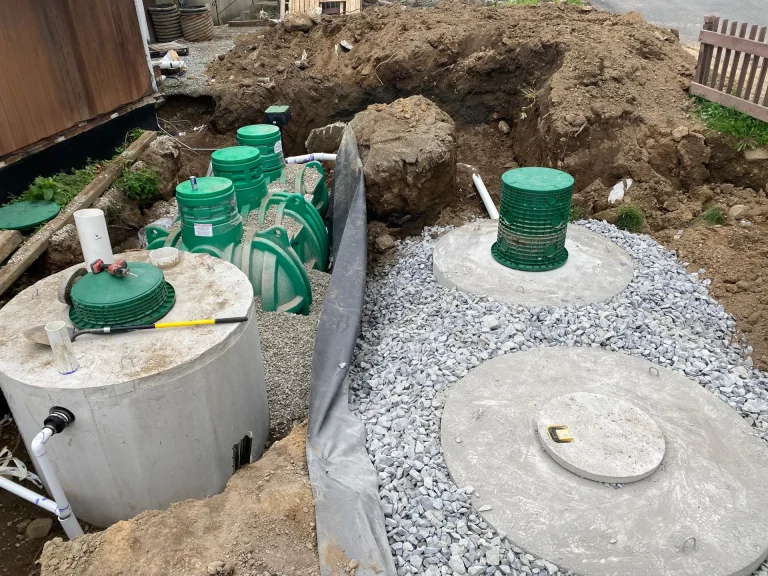
What owners should take from the comparison
Residential and commercial septic systems share the same broad purpose, but they do not live the same life. Homes usually need disciplined preventive care and better owner habits. Commercial properties need structured maintenance, documentation, and service aligned with actual operations. The best septic services recognize that distinction early and build a plan around it.
For homeowners, that usually means locating the system, keeping records, pumping on a schedule grounded in household use, and responding quickly to warning signs. For commercial owners and managers, it means treating septic maintenance as part of facility operations rather than a background utility. The system is not separate from the business. It supports the business every day the doors are open.
A well-maintained septic system rarely gets any attention, which is exactly the point. Whether it serves a family home or a busy commercial property, good service keeps the unpleasant parts invisible, the costly surprises rare, and the property functioning the way it should.
Excavating New Jersey LLC
Address: 406 County Rd 565, Wantage, NJ 07461
Phone number: +19737914284
FAQ About Septic Services
What is the average cost to get a septic tank emptied?
Emptying a septic tank costs between $290 and $560 on average, with most homeowners paying about $420. Prices vary based on tank size.
What is septic service?
Septic service inspects, pumps, cleans, and maintains a septic tank. A septic tank is a large, underground container that collects and treats wastewater from your home. Over time, sludge, scum, and other debris, like hair and solids, can build up in your tank and clog your drain field.
How often should you have a septic tank serviced?
A standard septic tank should be inspected every 1 to 3 years and pumped every 3 to 5 years. However, the exact schedule depends on your tank's capacity, household size, and daily water usage.